Meeting new people, becoming friends and possible more has drastically changed over the years past. Before the rise of technology, wireless connections and the internet meeting new people was a social occasion. You would have to actually leave the safety of your home and go to a public place to have a conversation with another human being. A process that would take time and effort, but a process that would be rewarded by genuine friendships and social connections.
Were you go to the extend of starting to build a romantic relationship with another person this process could even be stretched into a period of months to get to know another person.
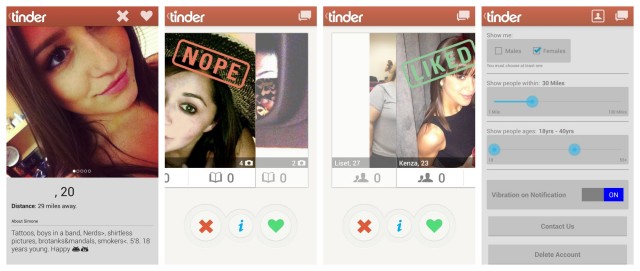
It seems that with these 21st centuries technology this process of meeting new people has become less of a social occasion and more of a digital experience. Social media is the most premiere form of communication these days, especially with age groups between 12 – 30 year olds. Meeting new people is also performed digital, for example in the form of Tinder. This app makes it possible for men to find women and vice versa. The App takes a persons Facebook picture and puts it on a big pile. People are then able to swipe their way to the bottom of the pile, liking or disliking people (normally of the other sex) in the process. When two people would like each others photo they are matched up and able to speak to one another.
Although this seems a great way to meet new people it also brings up some critical questions. Is this what meeting people is about? Creating a superficial connection because you both like each others (best) Facebook photo? Who says the person you’re talking to actually is who they say they are? Film and tv show “Catfish” (although probably scripted to some extend) has pretty much proven that you can’t always believe what people put online.
We live in a visual time where information is giving to us on screens and it seems that this has been clouding our judgement on situations and people. Columnist Alli Reed has made it very clear that some people don’t pay attention to information (or maybe just don’t care) if their visuals stimulation is good enough. By creating a fake online dating profile with a “provocative attractive” picture and horrible information she tried to proof that no man would even give here chance, however, she got nothing but positive reactions of men that would like to meet her. Seemingly not to care about here horrible information.
These new ways of communication via social media or apps like Tinder seem to be the new standerd, but what are the consequences or drastic changes to social behaviour? Conventional relationships are changed. People start building a social connections based on visual attraction instead of a relationship based in common interests. A friend setting up another friend with a blind date would become purposeless as the person being set up will without a doubt go online, find the person, have a visual reference and create a certain mindset before even having met the person in real life.